Triton Robotics
Sentry: Autonomous Mobile Turret
A redesigned, fully autonomous mobile turret for the DJI RoboMaster North America championships, ~50% lighter, with turret response 4× faster and Jetson-powered targeting.
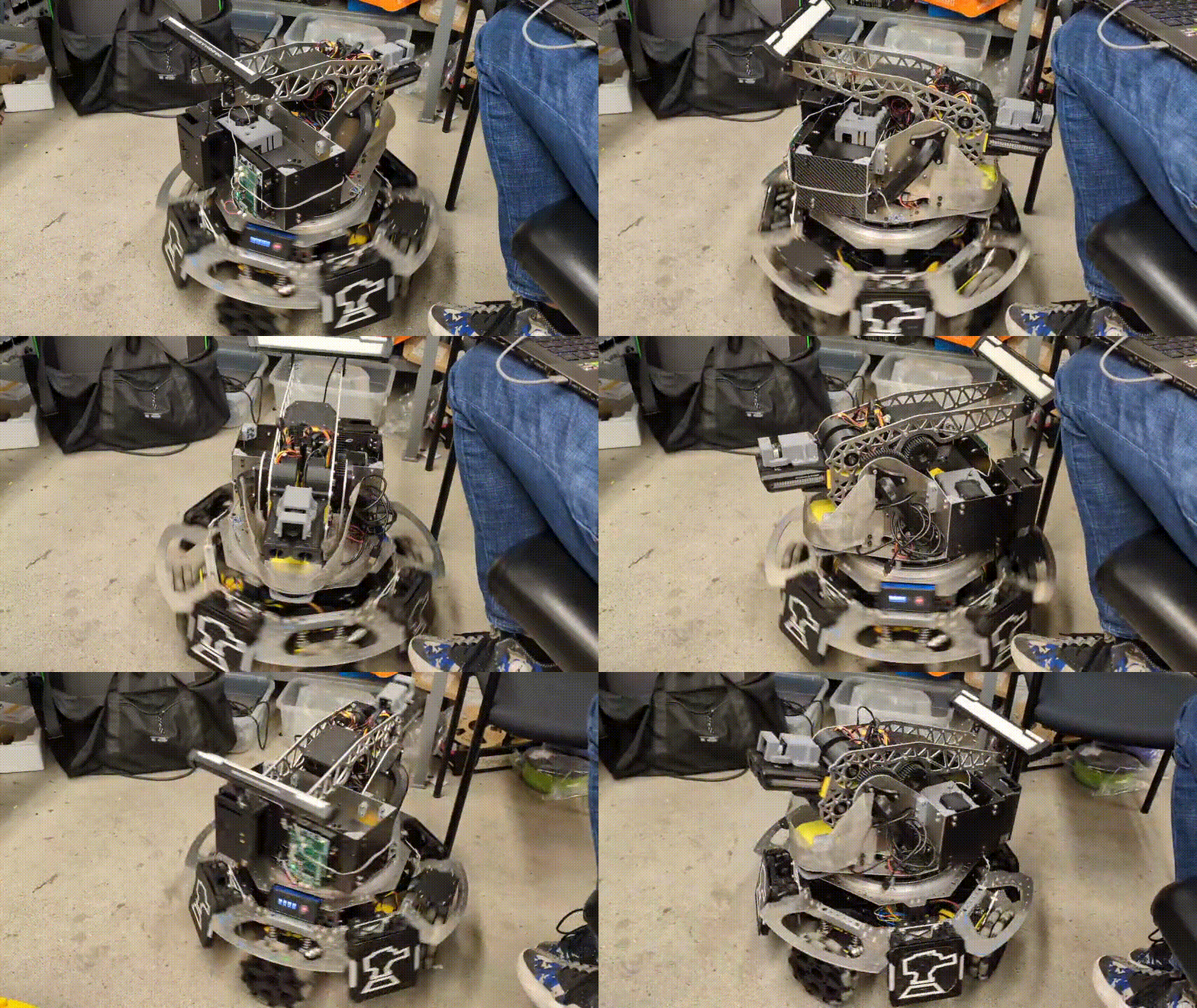
- ~50%Lighter platform
- 23%Pitch/yaw response time vs. previous
- 3rdRMNA Nationals (team best)
The challenge
Triton Robotics is UCSD’s team in the DJI RoboMaster North America (RMNA) championships, where robots compete head to head by detecting opponents and launching projectiles at their armor panels. The Sentry is the team’s fully autonomous mobile turret: no driver, no remote aiming. It has to find targets, reposition, and hit them on its own.
That puts heavy demands on the mechanical system. Vision and ballistics are only as good as the turret that points the launcher, and a heavy platform is slow to move and slow to aim.
Redesign
I redesigned and fabricated the Sentry from the ground up.
~50% lighter platform
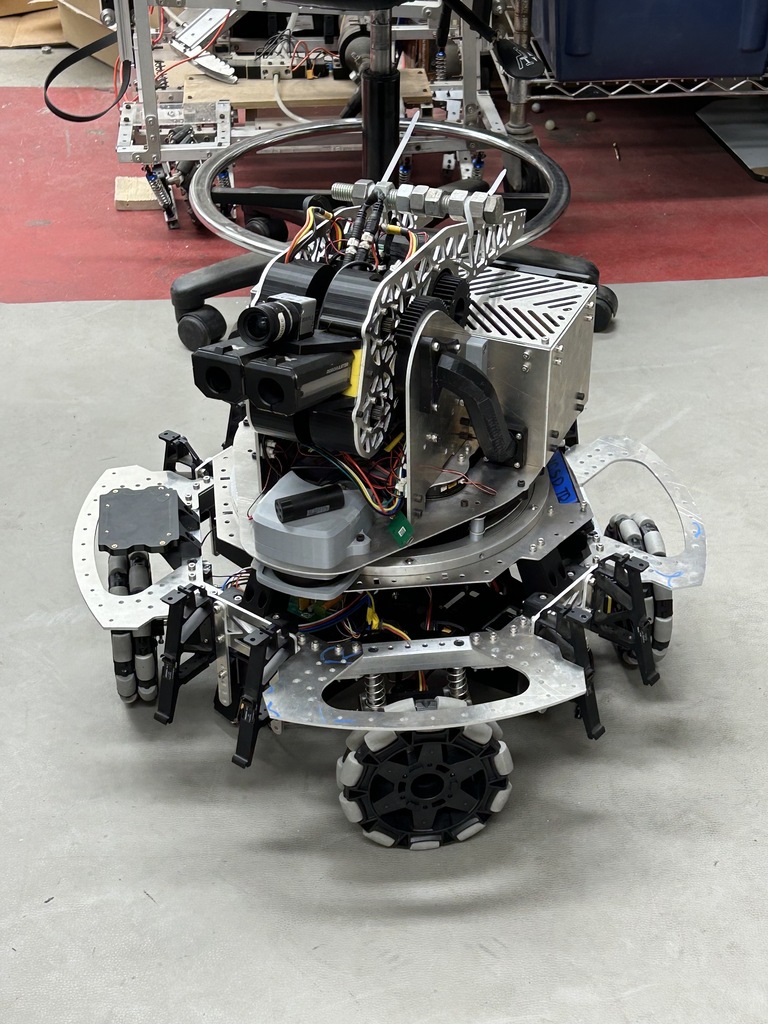
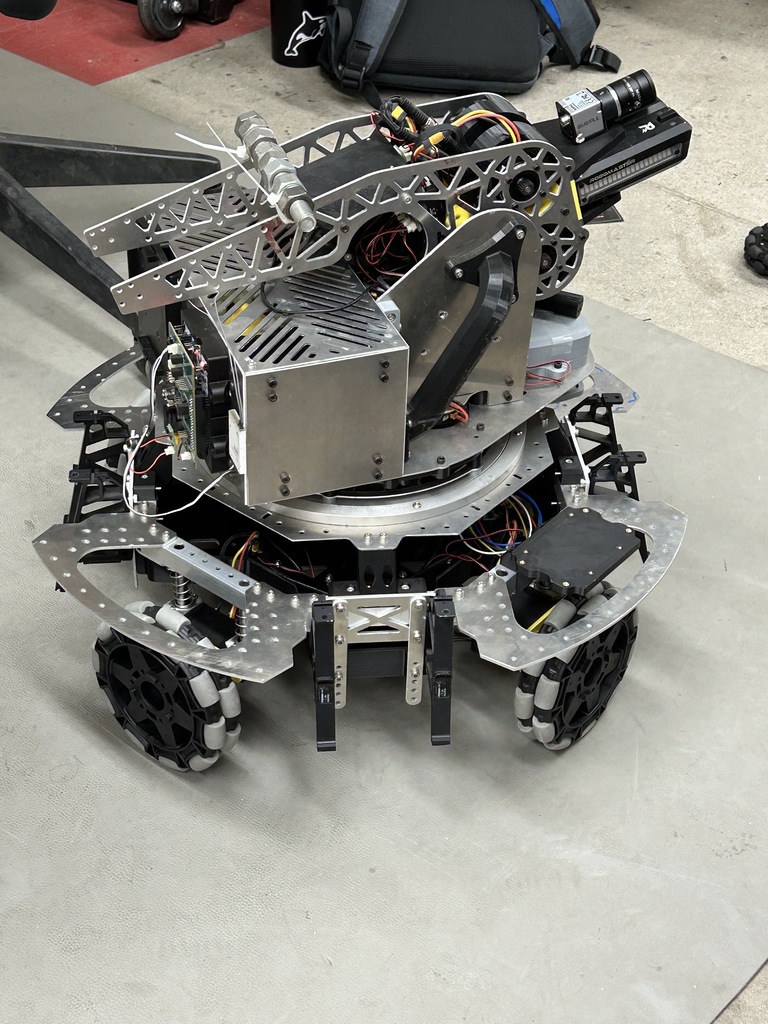
I stripped the previous robot back to what it needed and repackaged the subsystems around the turret, cutting platform weight by about 50%. The structure uses truss-cut aluminum plates, which remove material where it isn’t carrying load while keeping the frame stiff.
Faster pitch and yaw
I designed new rotary transmissions with weight compensation for the turret’s pitch and yaw axes. Because the compensation carries the launcher’s weight, the motors spend their torque on moving the turret rather than holding it up. Together with the lighter moving mass, this brought pitch and yaw response time down to 23% of the previous system, more than 4× faster.
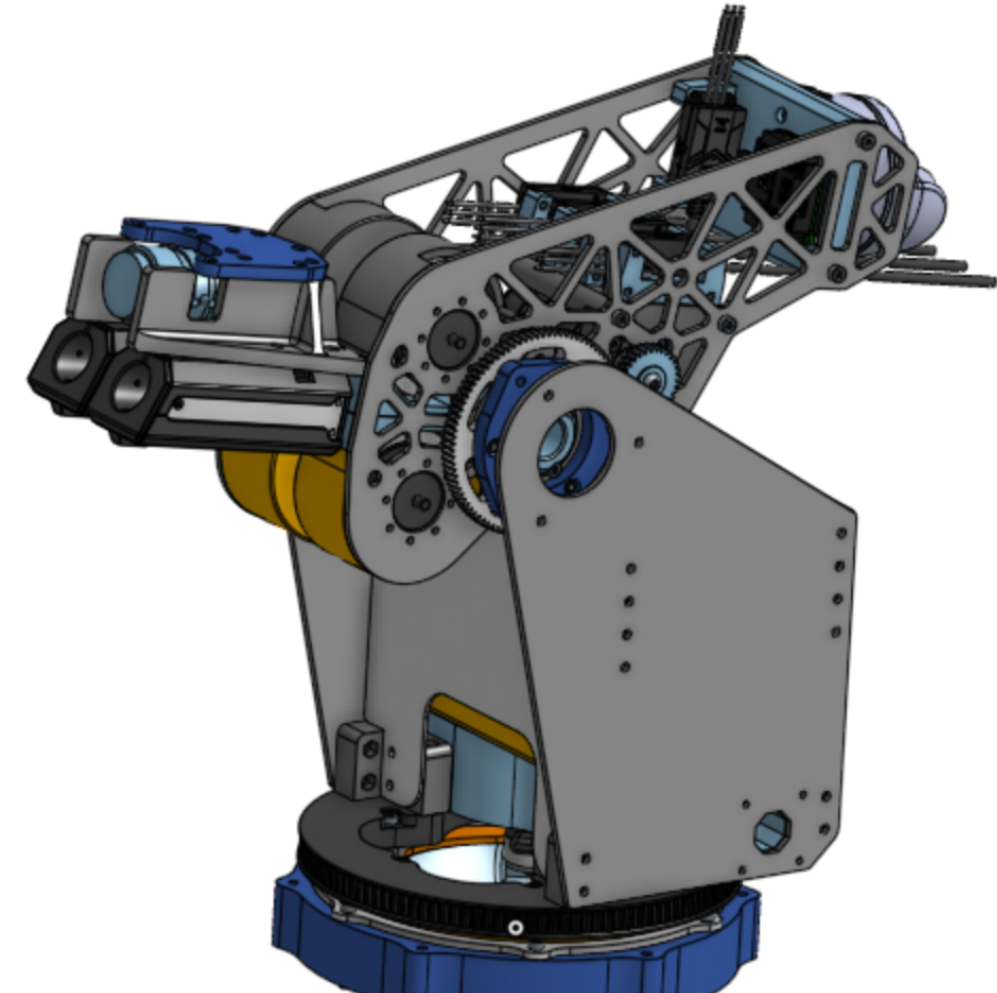
Combo indexer-barrel
I built a combined indexer and barrel that feeds projectiles straight into the launcher. It increased rate of fire and brought muzzle velocity up to the competition limit.
Autonomy
I used an Nvidia Jetson with CUDA to fully automate the control scheme on board:
- Autonomous targeting: the camera feed is processed on the GPU to detect and track opponent armor in real time.
- Real-time projectile calculations: the system computes the aim offset each shot needs from target distance and projectile speed, leading moving targets and compensating for drop.
- Task-based repositioning: the robot switches between behaviors and moves itself to better positions based on game state.
Results
- Contributed to the team’s best-ever 3rd place finish at RMNA Nationals.
- A platform ~50% lighter, with pitch/yaw response at 23% of the previous time.
- Rate of fire up, and muzzle velocity at the competition limit.
What I took away
Autonomy is a whole-system problem. The best perception code can’t hit anything if the turret is slow to get there. Making the mechanics lighter and faster was one of the biggest accuracy improvements for the software.
Gallery
Related projects
UCSD Delson Engineering Lab · 2023 – 2024
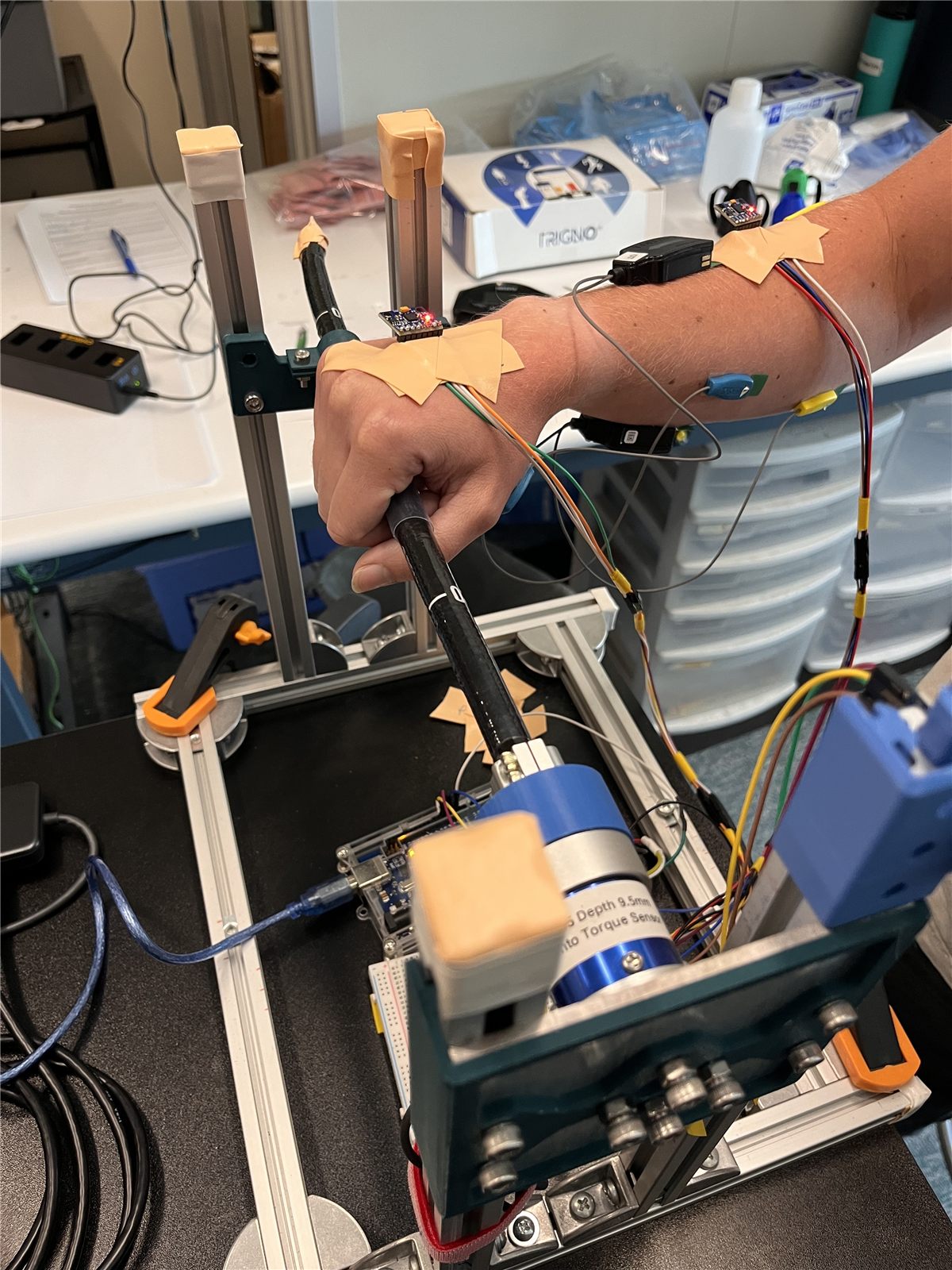
Colonoscope Manipulation Tools & Test Rig
External tools that make colonoscopes easier to handle, plus a portable rig for collecting torque and EMG data on a colonoscopy simulator.
TOM at UCSD · 2024 – 2025
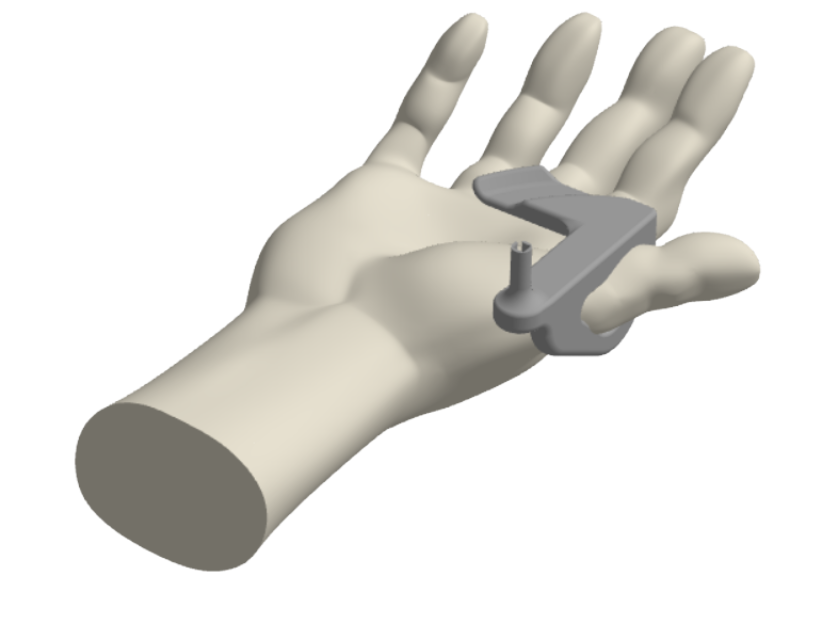
Hearing-Aid Handling Aid
A hand-worn clip that helps people with limited fine motor control hold and insert their own hearing aids.
UCSD MAE 3 · Intro to Engineering Design · 2023
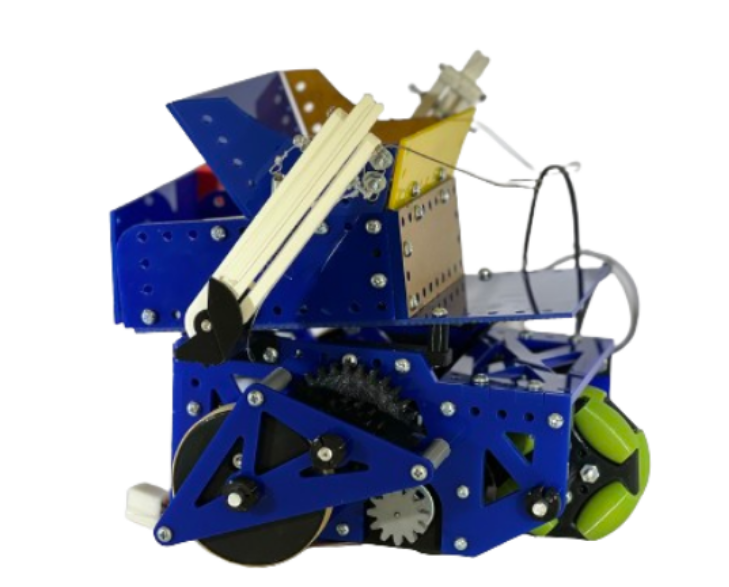
MAE 3 Competition Robot
A gear-driven collection robot with a hopper and pivoting arm, taken from Fusion 360 CAD to a laser-cut, bolted-together build for UCSD's MAE 3 design competition.