TOM at UCSD
Hearing-Aid Handling Aid
A hand-worn clip that helps people with limited fine motor control hold and insert their own hearing aids.
The problem
Hearing aids are tiny. For someone with arthritis, tremor, or limited hand strength, just picking one up and putting it in can be the hardest part of using it. Many older adults are in exactly this situation, and some stop wearing their hearing aids because handling them is too frustrating. That leads to social isolation, which is linked to faster cognitive decline.
Through TOM at UCSD, I designed a wearable handling aid so they can do it without help.
Design requirements
- No pinch grip required. The user should hold and guide the aid with large, whole-hand movements.
- Stays on the hand without the user having to hold onto it.
- Secure but gentle hold on the hearing aid, so it doesn’t drop but releases once it’s seated in the ear.
- Comfortable for daily wear and easy to put on with one hand.
- Cheap to make and easy to resize for different hands.
Design
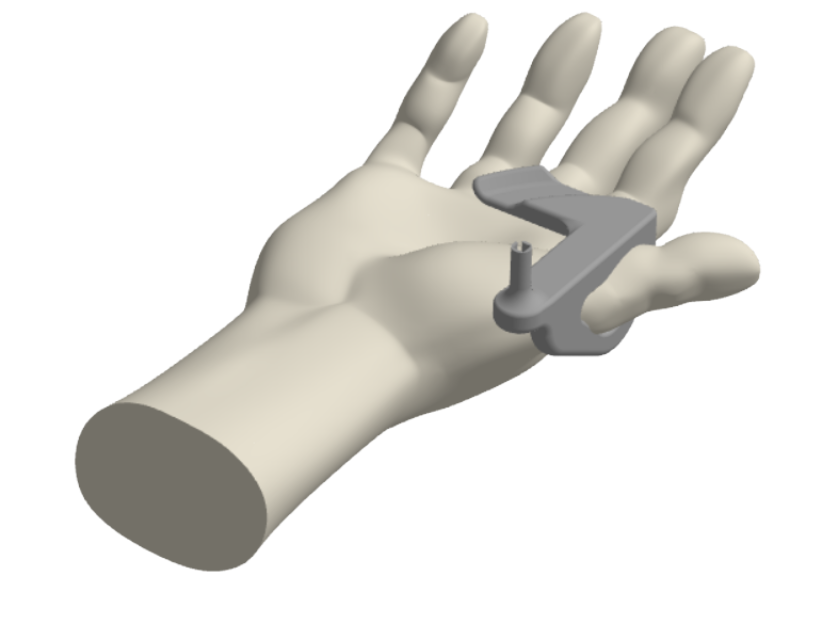
- A C-shaped clip wraps around the base of the index finger and rests in the web of the thumb, so it stays put through the hand’s own geometry and needs no grip.
- A post on the palm side holds the hearing aid in a fixed position. The user brings the hand toward the ear and the post guides the aid into place.
- The clip was modeled around a hand scan, so it follows the natural contours of the palm.
- It’s designed for 3D printing, so it can be scaled for different hand sizes and reprinted cheaply.
Next steps
- Print fit-test prototypes in a few sizes.
- Test with users: comfort, ease of putting it on, and whether it actually makes insertion easier.
- Iterate on the post’s grip and release.
- Release the files as open source through TOM.
Related projects
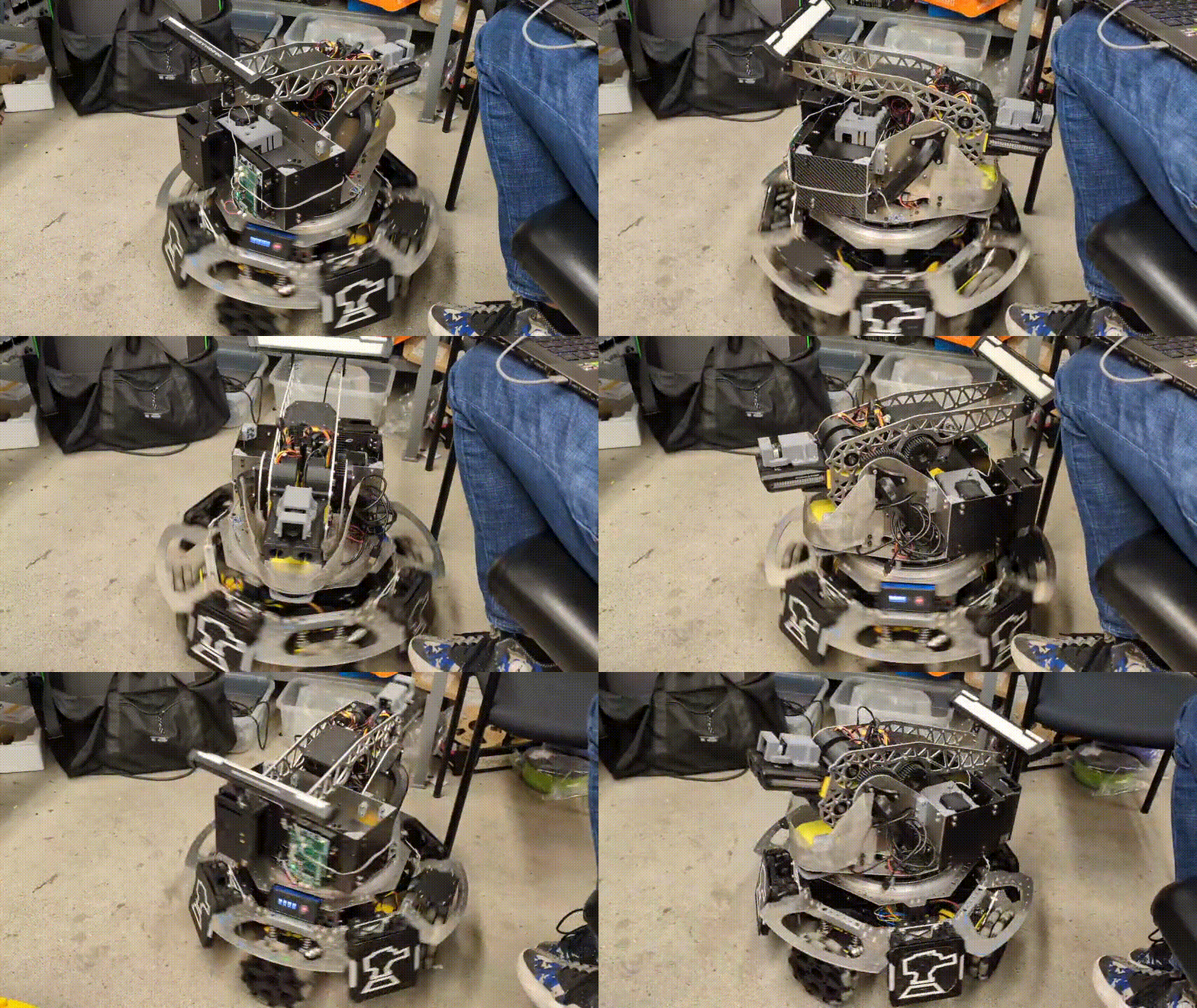
Triton Robotics · 2023 – 2025
Sentry: Autonomous Mobile Turret
A redesigned, fully autonomous mobile turret for the DJI RoboMaster North America championships, ~50% lighter, with turret response 4× faster and Jetson-powered targeting.
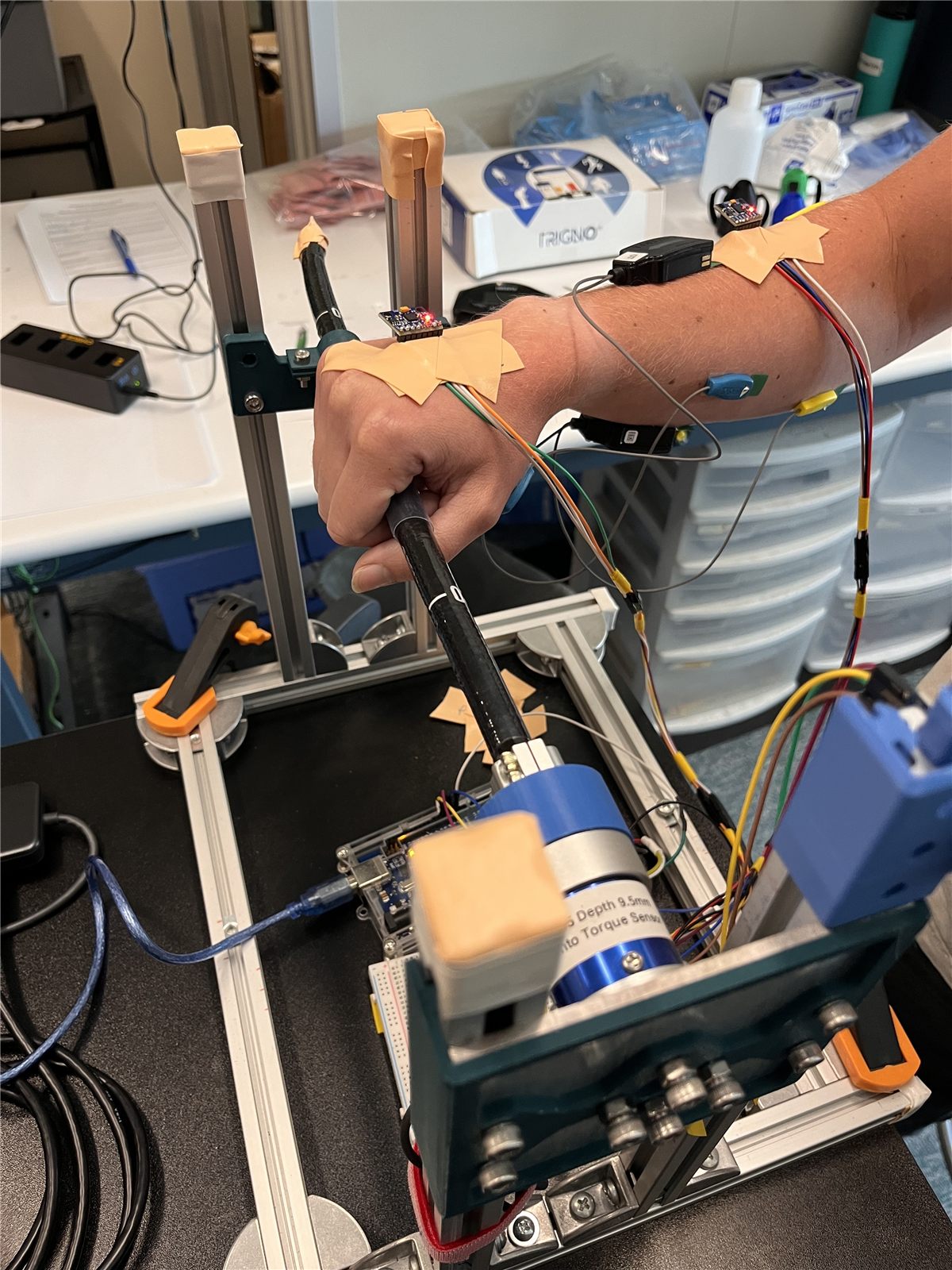
UCSD Delson Engineering Lab · 2023 – 2024
Colonoscope Manipulation Tools & Test Rig
External tools that make colonoscopes easier to handle, plus a portable rig for collecting torque and EMG data on a colonoscopy simulator.
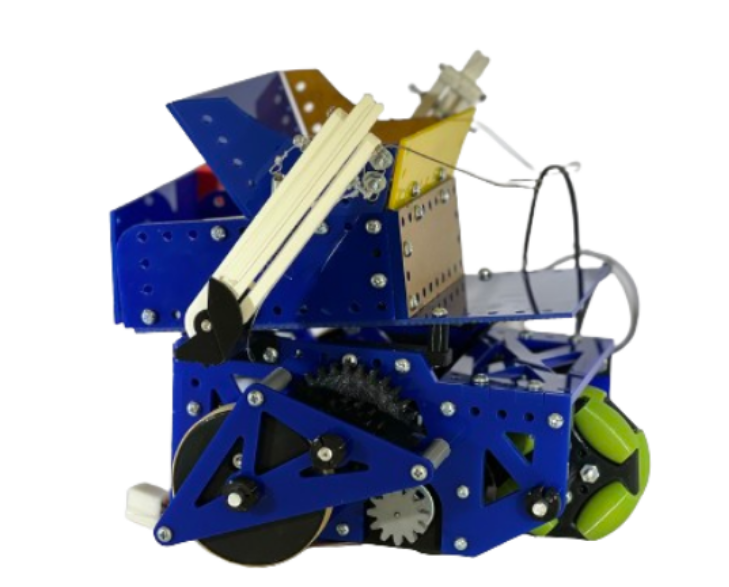
UCSD MAE 3 · Intro to Engineering Design · 2023
MAE 3 Competition Robot
A gear-driven collection robot with a hopper and pivoting arm, taken from Fusion 360 CAD to a laser-cut, bolted-together build for UCSD's MAE 3 design competition.