UCSD Delson Engineering Lab
Colonoscope Manipulation Tools & Test Rig
External tools that make colonoscopes easier to handle, plus a portable rig for collecting torque and EMG data on a colonoscopy simulator.
The problem
During a colonoscopy, the endoscopist steers the scope by twisting and pushing the insertion tube by hand. The tube is slippery with lubricant, so getting enough torque means gripping hard, over and over, for hours a day. Musculoskeletal pain and injury are common among endoscopists, especially in the hand, wrist, and thumb.
The Delson Lab studies how to reduce that strain. My work had two parts: tools that make the scope easier to grip and turn, and a test rig to measure whether they work.
Manipulation tools
Design goals
- Clamp onto a standard colonoscope without modifying it.
- Increase the effective grip diameter, so the same torque needs less grip force.
- Go on and come off quickly mid-procedure.
- Be cheap and easy to make (3D printable).
Design
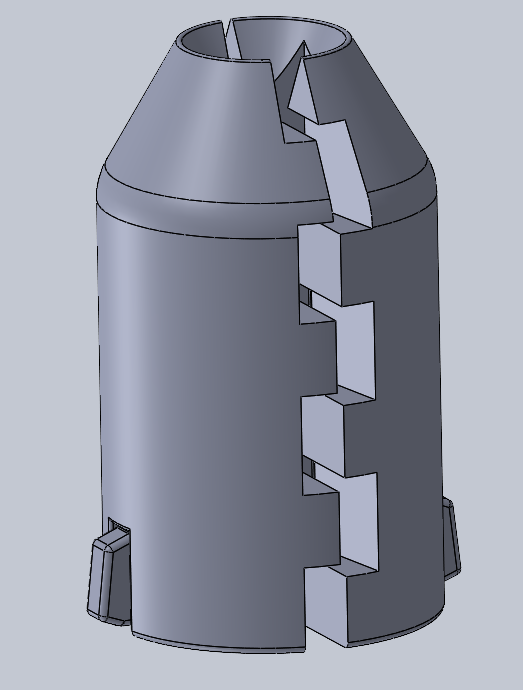
The grip is a split sleeve that snaps around the insertion tube. A stepped slit lets it open to slide onto the scope and then lock closed. Small tabs at the base help with alignment and removal. The larger outer diameter gives the endoscopist more leverage, so the scope turns with a lighter grip.
Tribology
A grip only helps if it doesn’t slip on a lubricated tube. I researched tribology, the science of friction, wear, and lubrication, to understand how the inner surface of the tool interacts with the scope’s coating. I then used what I learned on contact materials and surface textures to maximize torque transfer without damaging the scope.
Portable test rig
Whether a tool “helps” is a quantitative question, so I designed and assembled a portable testing rig for the advanced colonoscopy simulator at UCSD’s Center for Surgery of the Future.
- An aluminum-extrusion frame holds the colonoscope shaft in a realistic orientation and clamps to a table, so it’s easy to move between rooms.
- An inline torque sensor at the base of the shaft measures exactly how much torque the user applies.
- Wireless EMG sensors on the forearm record muscle activation, a direct measure of how hard the user is working to produce that torque.
- Small motion sensors on the hand and wrist capture posture.
- An Arduino reads the torque sensor and logs it alongside the other streams.
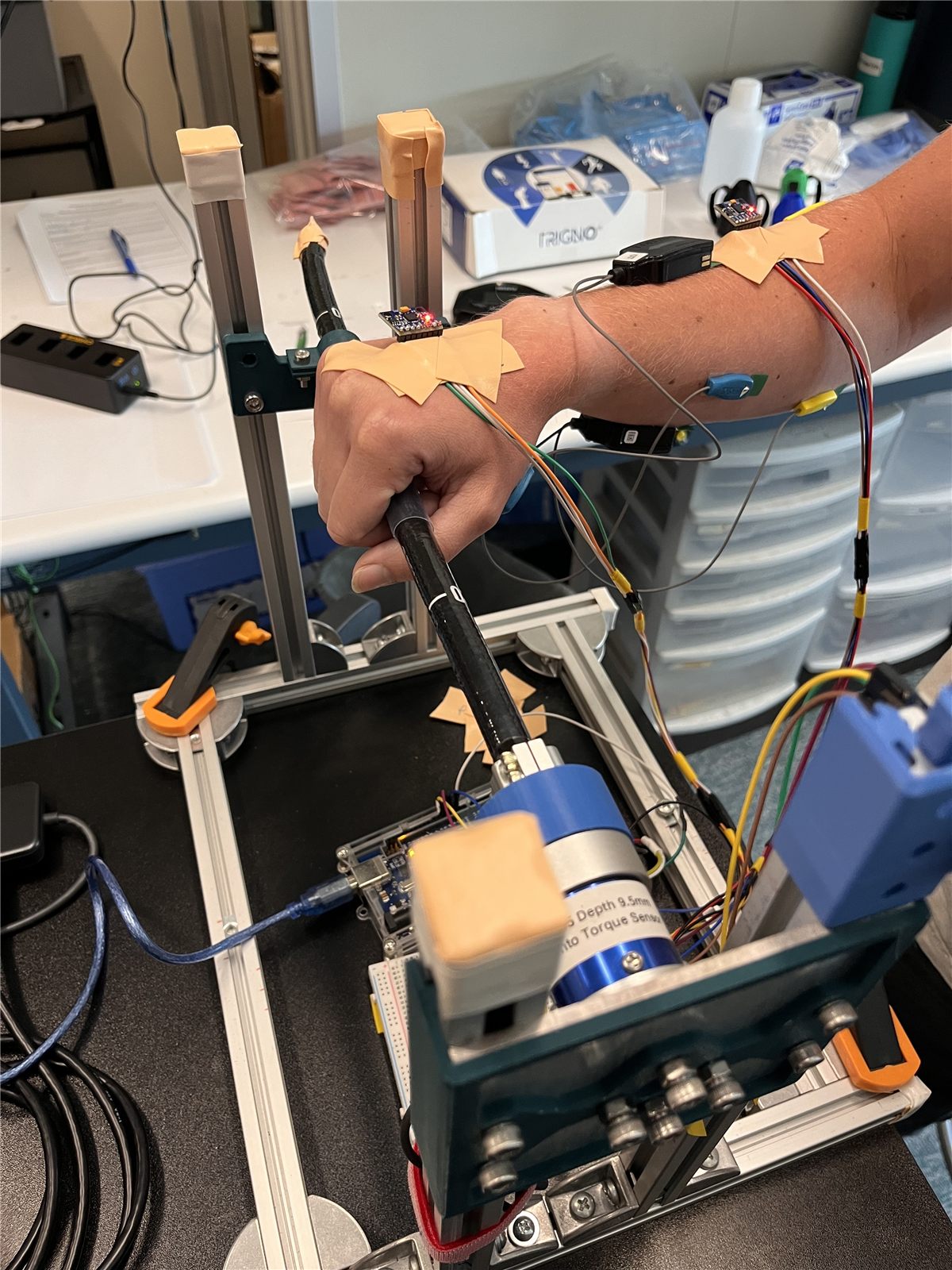
The key metric is torque per unit of muscle activation. If a tool lets users produce the same torque with less EMG activity, it’s reducing strain.
What I took away
This was my first research project, and it taught me that a good design claim needs a measurement behind it. Building the rig took as much engineering as the tool did.
Related projects
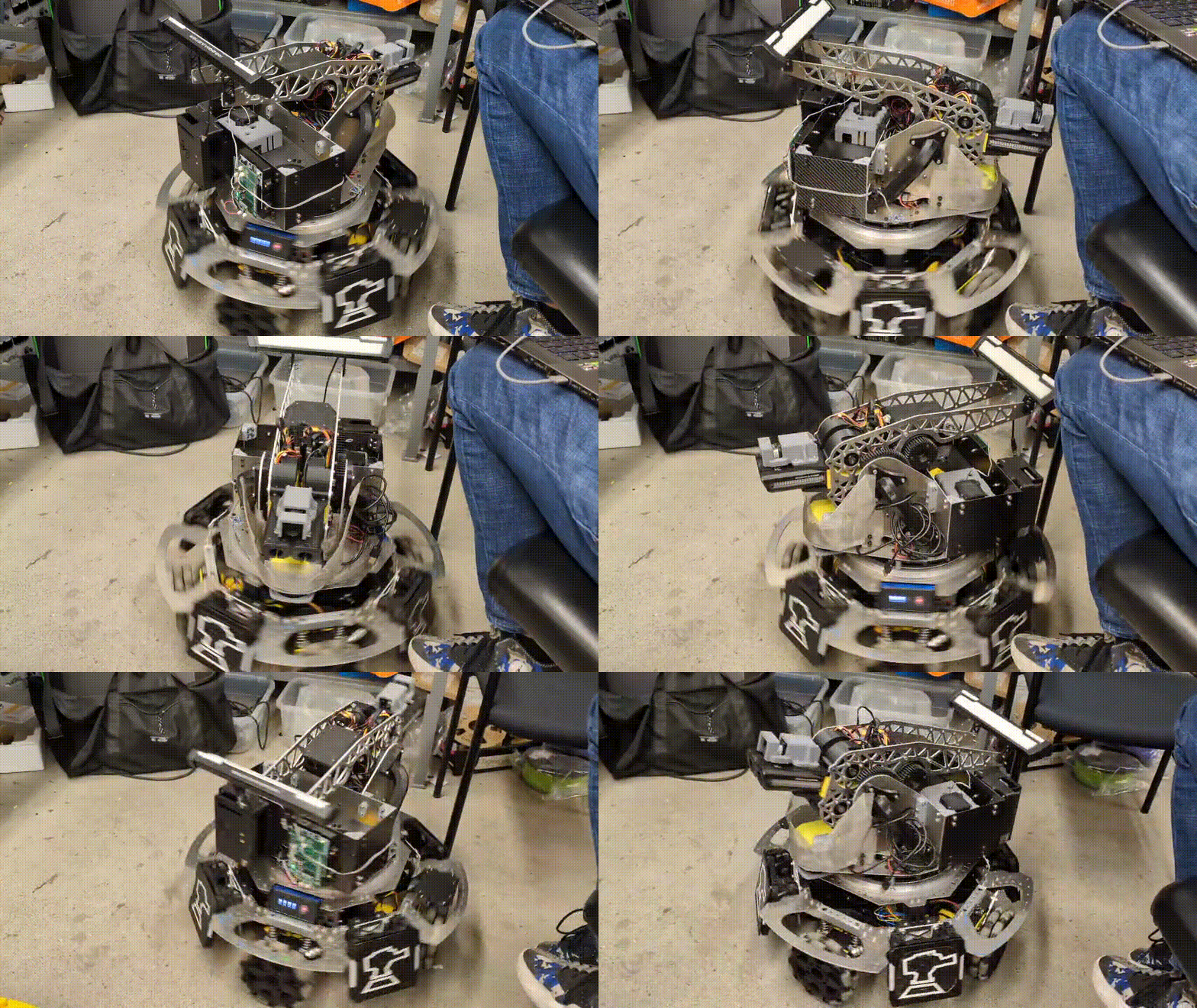
Triton Robotics · 2023 – 2025
Sentry: Autonomous Mobile Turret
A redesigned, fully autonomous mobile turret for the DJI RoboMaster North America championships, ~50% lighter, with turret response 4× faster and Jetson-powered targeting.
UCSD Morimoto Robotics Lab · 2025 – Present
Sub-Millimeter Electrosurgical Knife
A sub-millimeter electrosurgical knife designed and fabricated for endoscopic submucosal dissection.
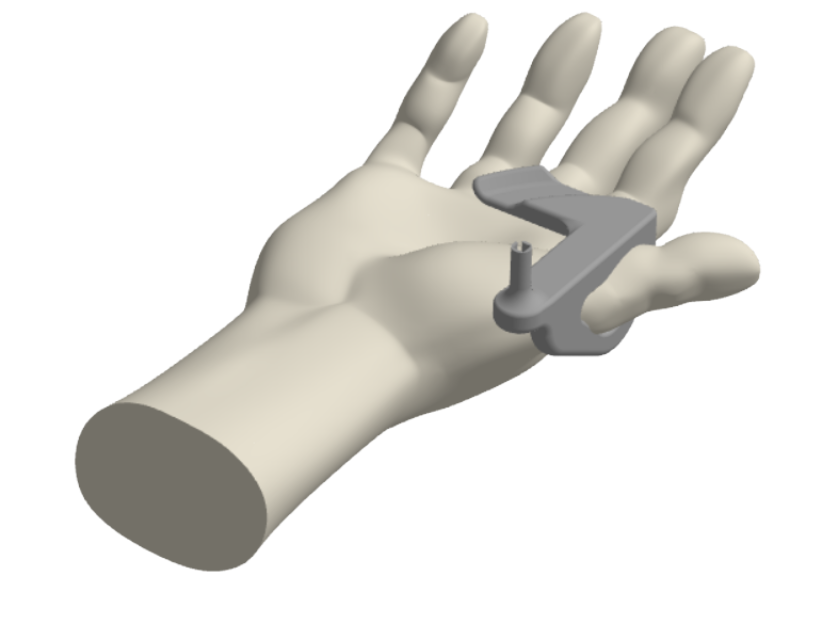
TOM at UCSD · 2024 – 2025
Hearing-Aid Handling Aid
A hand-worn clip that helps people with limited fine motor control hold and insert their own hearing aids.