UCSD Morimoto Robotics Lab
Sub-Millimeter Electrosurgical Knife
A sub-millimeter electrosurgical knife designed and fabricated for endoscopic submucosal dissection.
The problem
In endoscopic submucosal dissection (ESD), the lesion is cut free with an electrosurgical knife: a small electrode that passes high-frequency current into tissue, heating it fast enough to cut and coagulate at the same time. Commercial ESD knives are built to pass through an endoscope’s working channel on their own.
Our nitinol wristed instrument needed a knife that could ride alongside the wrist in the same small space. The off-the-shelf options were too large and couldn’t be integrated, so I designed one.
Design requirements
- Sub-millimeter cutting tip that fits next to the wrist and grasper.
- Electrical isolation from the conductive nitinol wrist, so current only flows where we want it.
- Current concentrated at the tip. Stray current along the shaft risks burning tissue that isn’t being cut.
- Compatible with a standard electrosurgical generator (ESG) and return pad.
Design
The knife is a thin exposed electrode tip on an insulated shaft. Only the tip is bare, so current density, and therefore heating, is highest exactly where the cut happens. A flexible shaft lets it follow the scope while staying straight enough to aim. An isolation sleeve keeps the knife from contacting the wrist.
Fabrication
I fabricated the knife in-house. At this scale, small variations in how much of the tip is exposed change how it cuts, so the process was built around repeatable tip exposure and reliable insulation.
Testing
- Bench activation: the knife was connected to a standard ESG, with a foot pedal and return pad, to confirm clean cutting at the tip.
- Ex-vivo ESD: the knife performed the cutting step in the full traction-assisted resection sequence with the wristed instrument (step (e) on the project page).
Electrosurgery vs. thermocautery
I also built a thermocautery knife for the same application. The two cut in fundamentally different ways:
| Electrosurgical | Thermocautery | |
|---|---|---|
| How it heats | RF current flows through the tissue | A resistive element heats itself, then conducts heat into tissue |
| Return pad needed | Yes | No |
| Current in the patient | Yes | None |
| Power source | Standard ESG | Low-voltage DC supply |
What I took away
Electrosurgical tools are as much an electrical design problem as a mechanical one. Getting insulation and exposed area right mattered more than the overall geometry.
Related projects
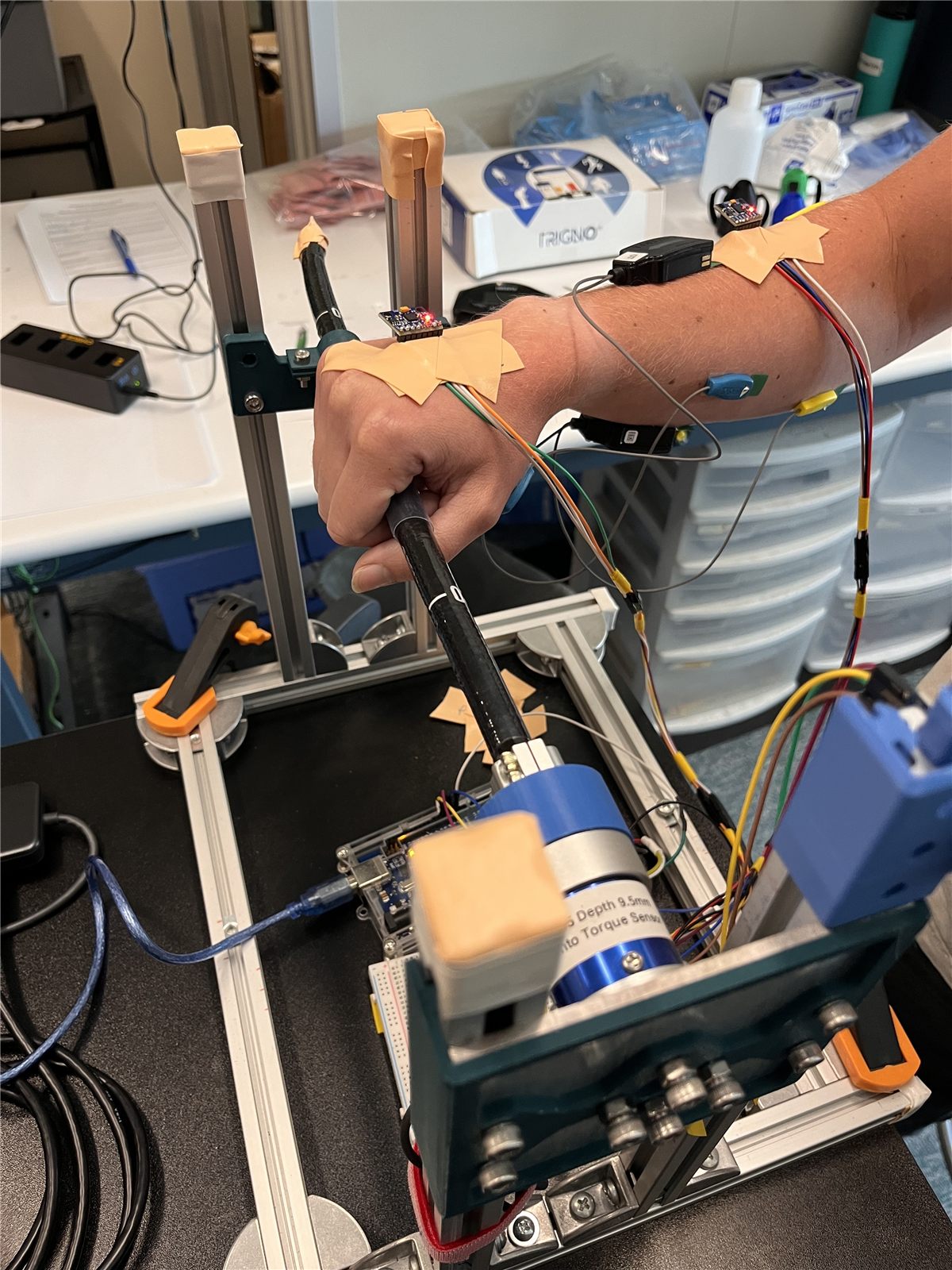
UCSD Delson Engineering Lab · 2023 – 2024
Colonoscope Manipulation Tools & Test Rig
External tools that make colonoscopes easier to handle, plus a portable rig for collecting torque and EMG data on a colonoscopy simulator.
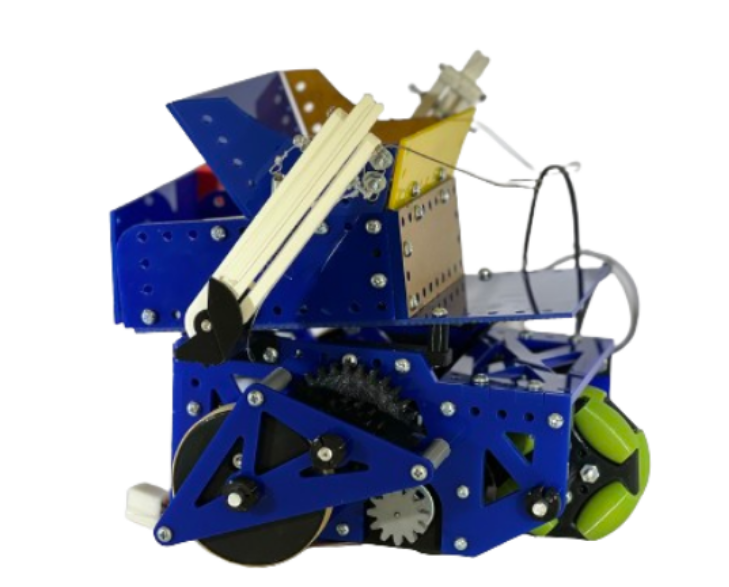
UCSD MAE 3 · Intro to Engineering Design · 2023
MAE 3 Competition Robot
A gear-driven collection robot with a hopper and pivoting arm, taken from Fusion 360 CAD to a laser-cut, bolted-together build for UCSD's MAE 3 design competition.
UCSD Morimoto Robotics Lab · 2025 – Present
Nitinol Wristed Surgical Instruments
Wristed robotic instruments for minimally invasive removal of cancerous colonic polyps, plus a manufacturing workflow that cut machining time by 90%.