UCSD MAE 3 · Intro to Engineering Design
MAE 3 Competition Robot
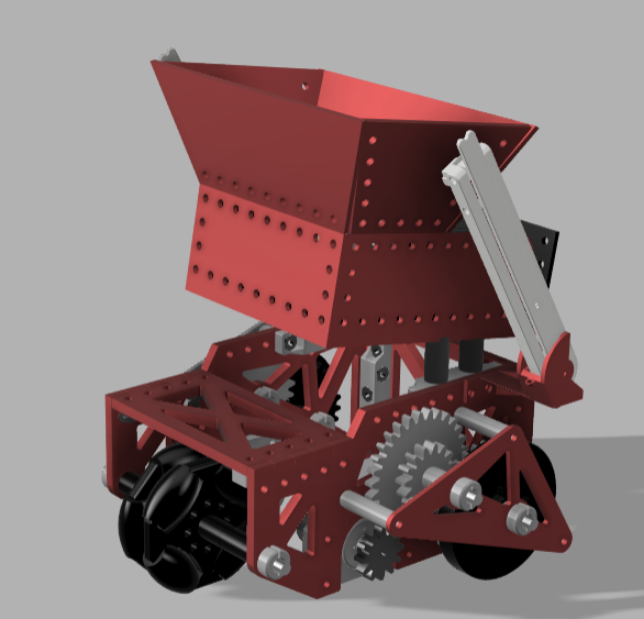
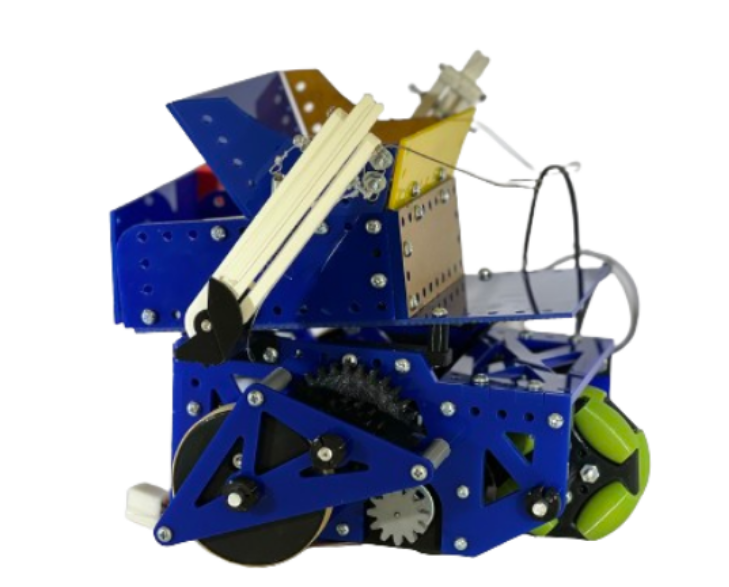
A gear-driven collection robot with a hopper and pivoting arm, taken from Fusion 360 CAD to a laser-cut, bolted-together build for UCSD's MAE 3 design competition.
The challenge
MAE 3 is UCSD’s introductory engineering design course. Small teams design, build, and compete with a mobile robot in a quarter-long project. Our robot had to collect game pieces, hold them, and deliver them to a scoring zone within a timed match.
Design
Chassis
A gusseted box chassis of laser-cut panels joined with fasteners and standoffs. The cross-bracing keeps it stiff without adding much weight. Every panel can be recut and swapped in minutes, which mattered as the design changed between tests.
Drivetrain
- Spur-gear reduction on the drive motors trades speed for torque, so the robot can push through contact and carry a full hopper.
- Omni wheels at the front let the robot pivot tightly, while the geared drive wheels at the back provide traction.
Hopper & arm
- A large flared hopper on top collects and holds game pieces. Its angled walls funnel them toward the center.
- A pivoting arm with linkage plates loads pieces into the hopper and delivers them to the scoring zone.
Build & iteration
We went from CAD to a laser-cut, bolted-together build, then tested and adjusted:
- First assembly to check fit and gear mesh.
- Drive testing to tune the gear ratio and wheel layout.
- Arm and hopper testing with real game pieces.
- Final refinements before competition.
Outcome
The robot went from CAD to a working competition build in one quarter.
What I took away
MAE 3 was my first complete design → fabricate → test loop. It taught me to design for the manufacturing process I actually had access to, and to leave room in the design for changes after the first test.
Related projects
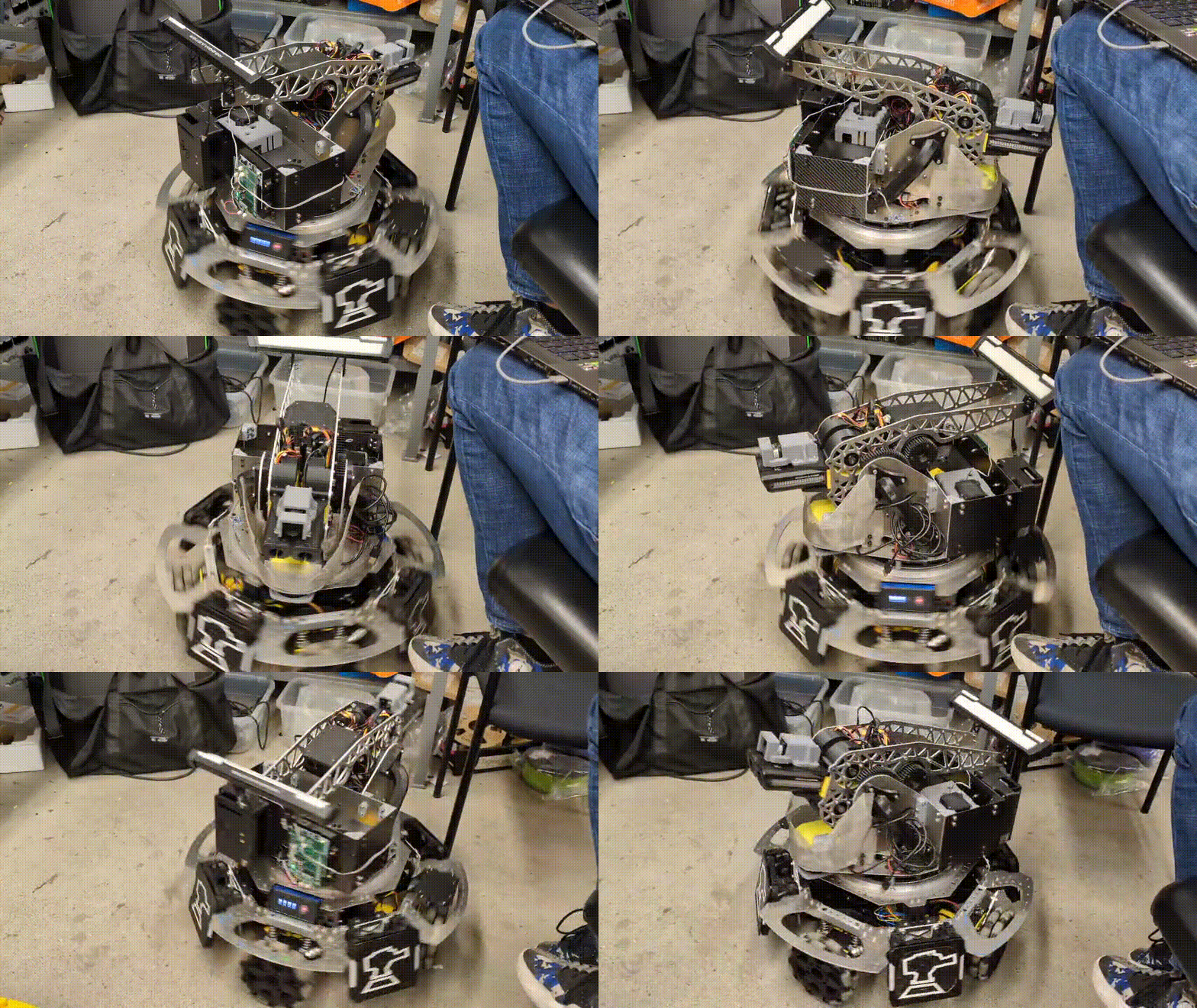
Triton Robotics · 2023 – 2025
Sentry: Autonomous Mobile Turret
A redesigned, fully autonomous mobile turret for the DJI RoboMaster North America championships, ~50% lighter, with turret response 4× faster and Jetson-powered targeting.
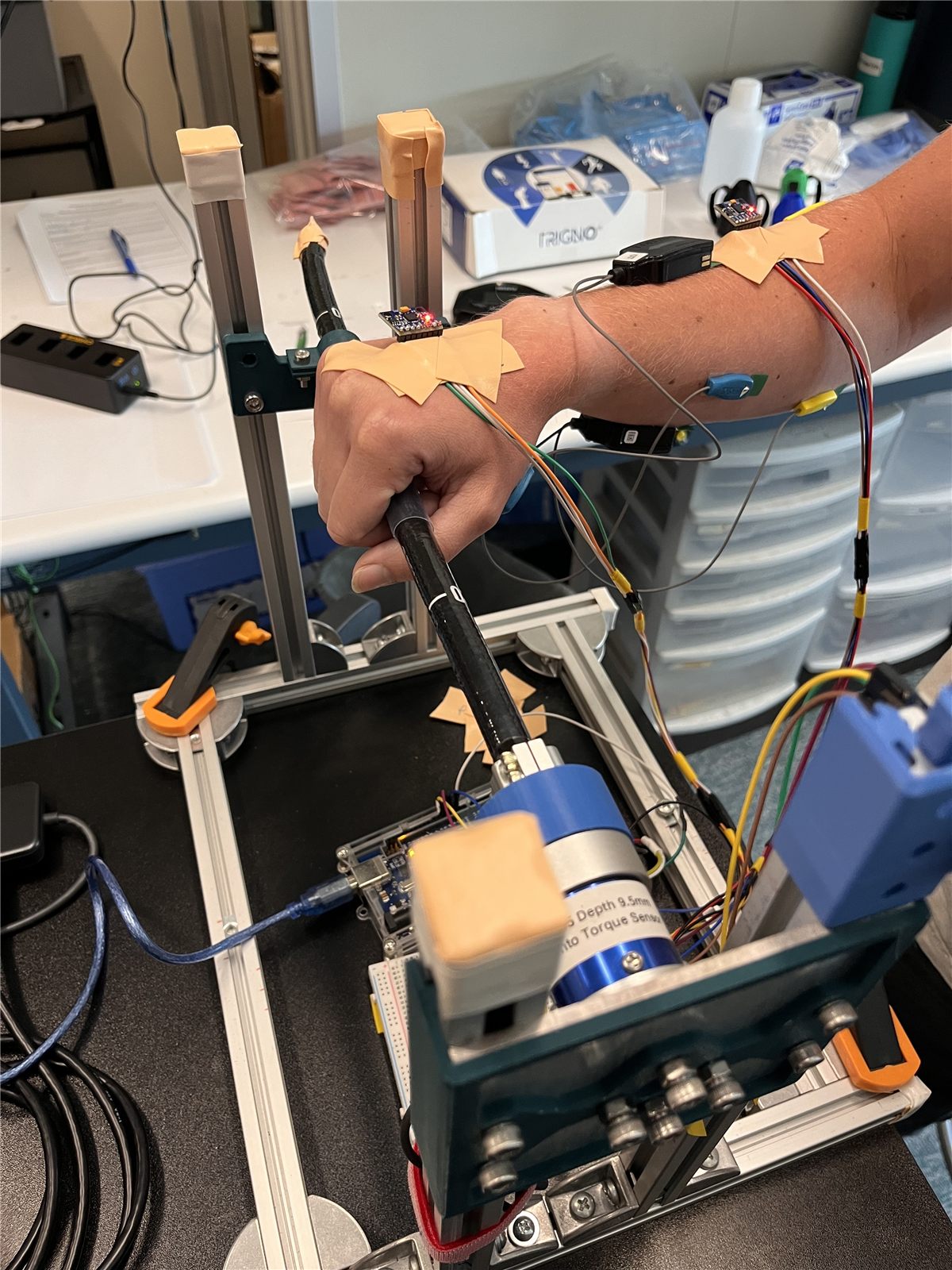
UCSD Delson Engineering Lab · 2023 – 2024
Colonoscope Manipulation Tools & Test Rig
External tools that make colonoscopes easier to handle, plus a portable rig for collecting torque and EMG data on a colonoscopy simulator.
UCSD Morimoto Robotics Lab · 2025 – Present
Sub-Millimeter Electrosurgical Knife
A sub-millimeter electrosurgical knife designed and fabricated for endoscopic submucosal dissection.