UCSD Morimoto Robotics Lab
Surgical Robot Control & Data Pipeline
A ROS 2 layer that synchronizes a 40-dimension state space, with micro-ROS actuation and a VM-based TCP–ROS bridge for load cells, 6-axis force sensors, and EM tracking.
The problem
Characterizing a surgical instrument means answering questions like: when the distal tendon is pulled with this much force, where does the tip end up, and how hard does it push on tissue? Each of those numbers comes from a different sensor:
| Sensor | Measures | Challenge |
|---|---|---|
| Inline load cells | Tendon tension | Read by the embedded motor controller |
| 6-axis load sensor | Tip/tissue forces and torques | Separate DAQ with its own clock |
| Electromagnetic (EM) tracker | 3D tip position & orientation | Vendor software that doesn’t speak ROS |
If these streams aren’t on a common clock, you can’t line up force with position, and the data is useless for modeling.
Architecture
I built a ROS 2 layer that brings every actuator and sensor into one 40-dimension state space, synchronized on a common clock:
 Tendon motors ◄──┐
 Load cells ──────┤ MCU running micro-ROS ──(serial/UDP)──► micro-ROS agent ─┐
                  │                                                           │
 6-axis sensor ───────────────────────────────────────► ROS 2 driver node ───┼──► ROS 2 topics ──► rosbag / analysis
                                                                              │
 EM tracker ──► vendor software (VM) ──► TCP bridge ──────────────────────────┘
micro-ROS actuation
The tendon motors and load cells run on a microcontroller using micro-ROS, which puts a ROS 2 node directly on the embedded device. Motor commands come in as ROS topics, and load-cell readings are published back with timestamps from the same ROS time base as the rest of the system. That removed the need for a custom serial protocol.
The VM-based TCP–ROS bridge
The EM tracker’s software didn’t run natively alongside ROS. I set it up in a virtual machine and wrote a TCP bridge: a small server on the VM streams pose samples over a socket, and a ROS node on the host receives them, stamps them, and republishes them as standard ROS messages. Every sensor ends up on the same topic graph, recordable in a single bag file.
Time synchronization
High-frequency data is only useful if samples line up. The pipeline:
- stamps every sample against a single ROS clock as close to acquisition as possible,
- keeps each sensor at its native rate instead of downsampling at the source,
- and aligns streams after the fact by timestamp, so analysis can interpolate force at the exact moment of each position sample.
Results
- One command launches the full system and records every sensor into one time-aligned dataset.
- The data feeds directly into instrument characterization and the traction-assisted ESD publication.
- New sensors can be added by writing a single ROS node rather than reworking the whole stack.
What I took away
Mechanical engineers tend to treat data collection as an afterthought. Building this pipeline showed me that the quality of an experiment is capped by the quality of its data infrastructure. Putting time into synchronization up front saved weeks of alignment work later.
Related projects
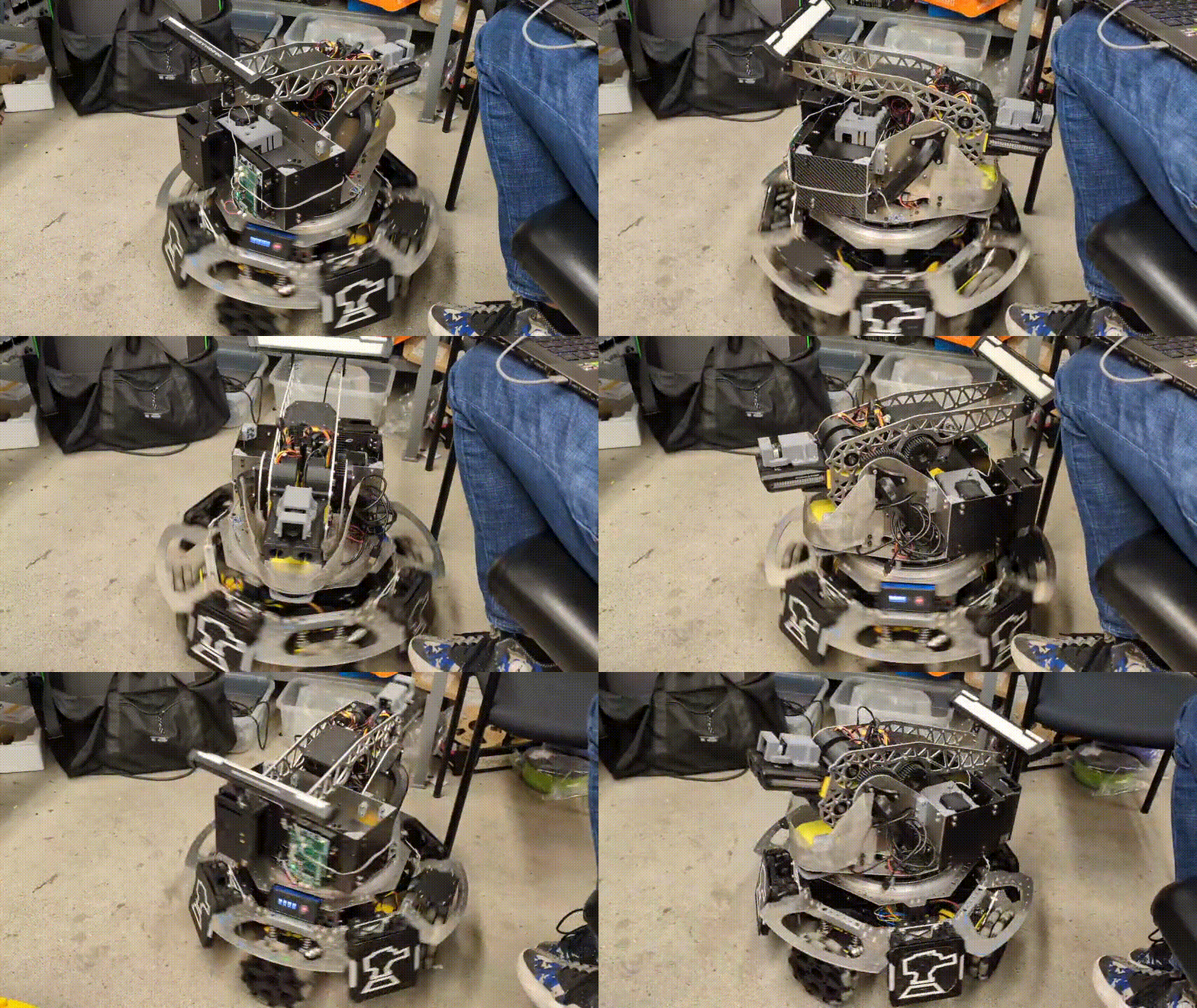
Triton Robotics · 2023 – 2025
Sentry: Autonomous Mobile Turret
A redesigned, fully autonomous mobile turret for the DJI RoboMaster North America championships, ~50% lighter, with turret response 4× faster and Jetson-powered targeting.
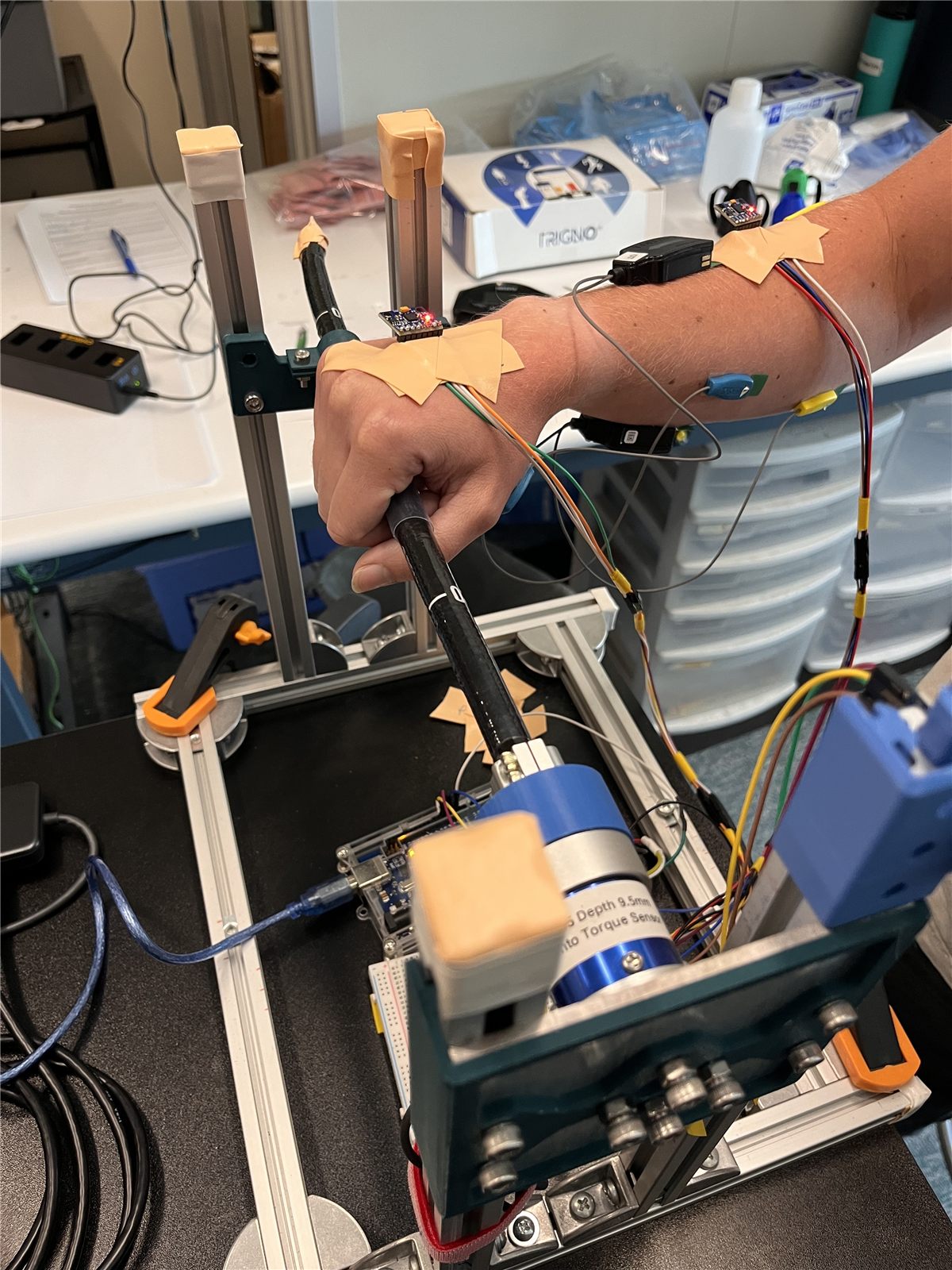
UCSD Delson Engineering Lab · 2023 – 2024
Colonoscope Manipulation Tools & Test Rig
External tools that make colonoscopes easier to handle, plus a portable rig for collecting torque and EMG data on a colonoscopy simulator.
UCSD Morimoto Robotics Lab · 2025 – Present
Sub-Millimeter Electrosurgical Knife
A sub-millimeter electrosurgical knife designed and fabricated for endoscopic submucosal dissection.